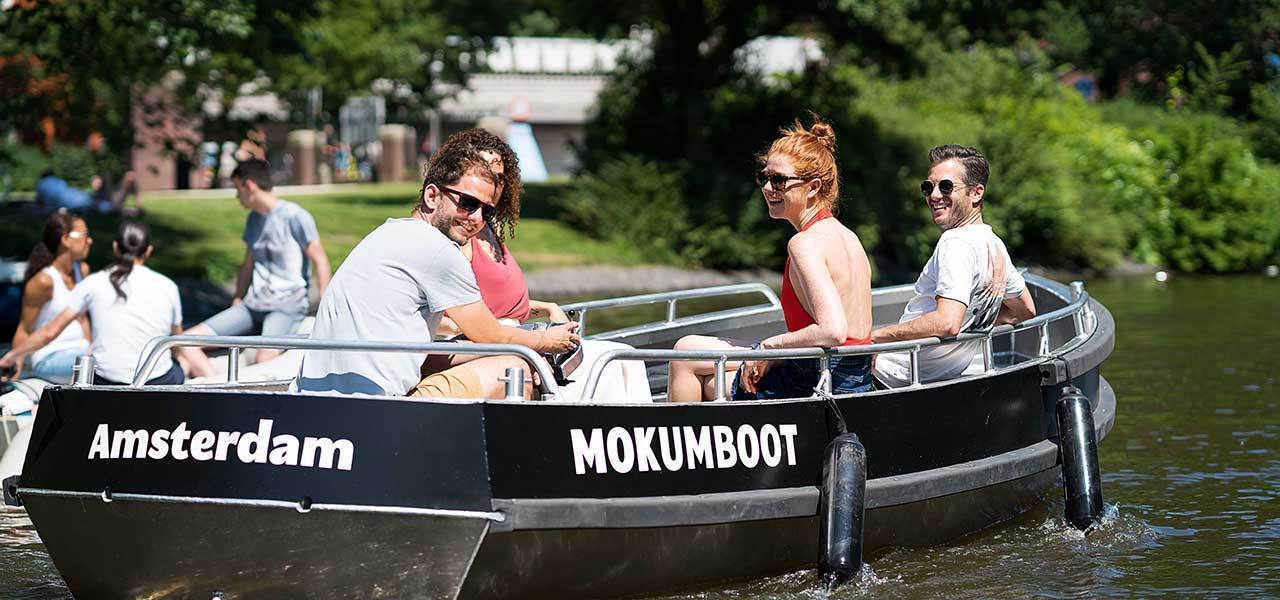
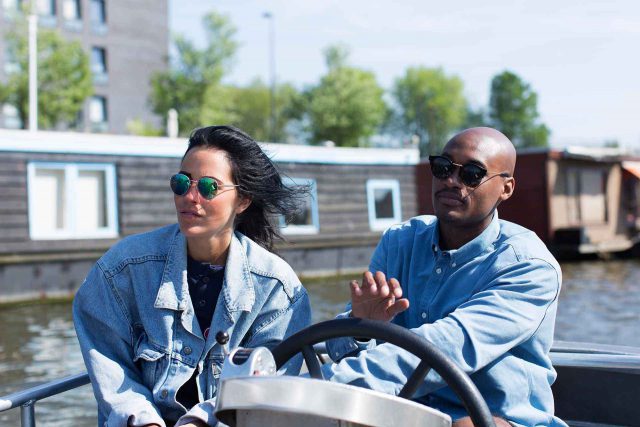
Explore Amsterdam by Mokumboot sloepje on the Amstel

Rent a boat

Rent a boat

Book directly

Canal route: 2 hours

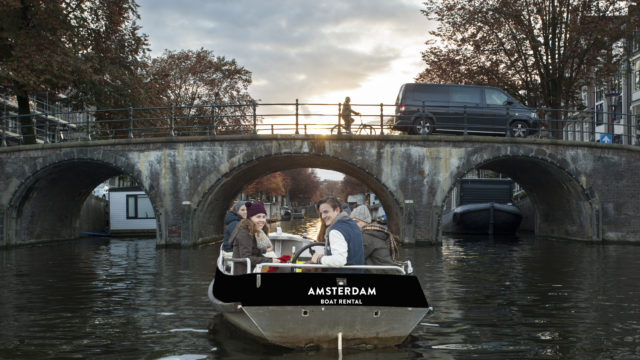
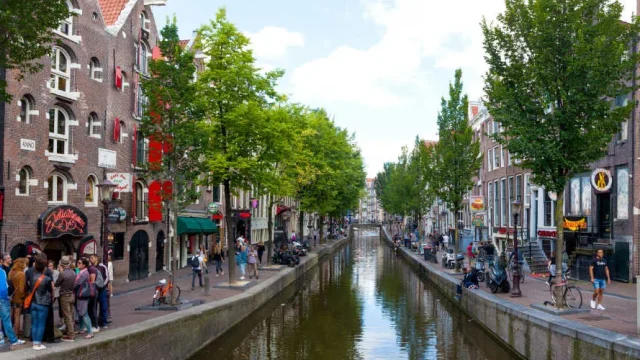
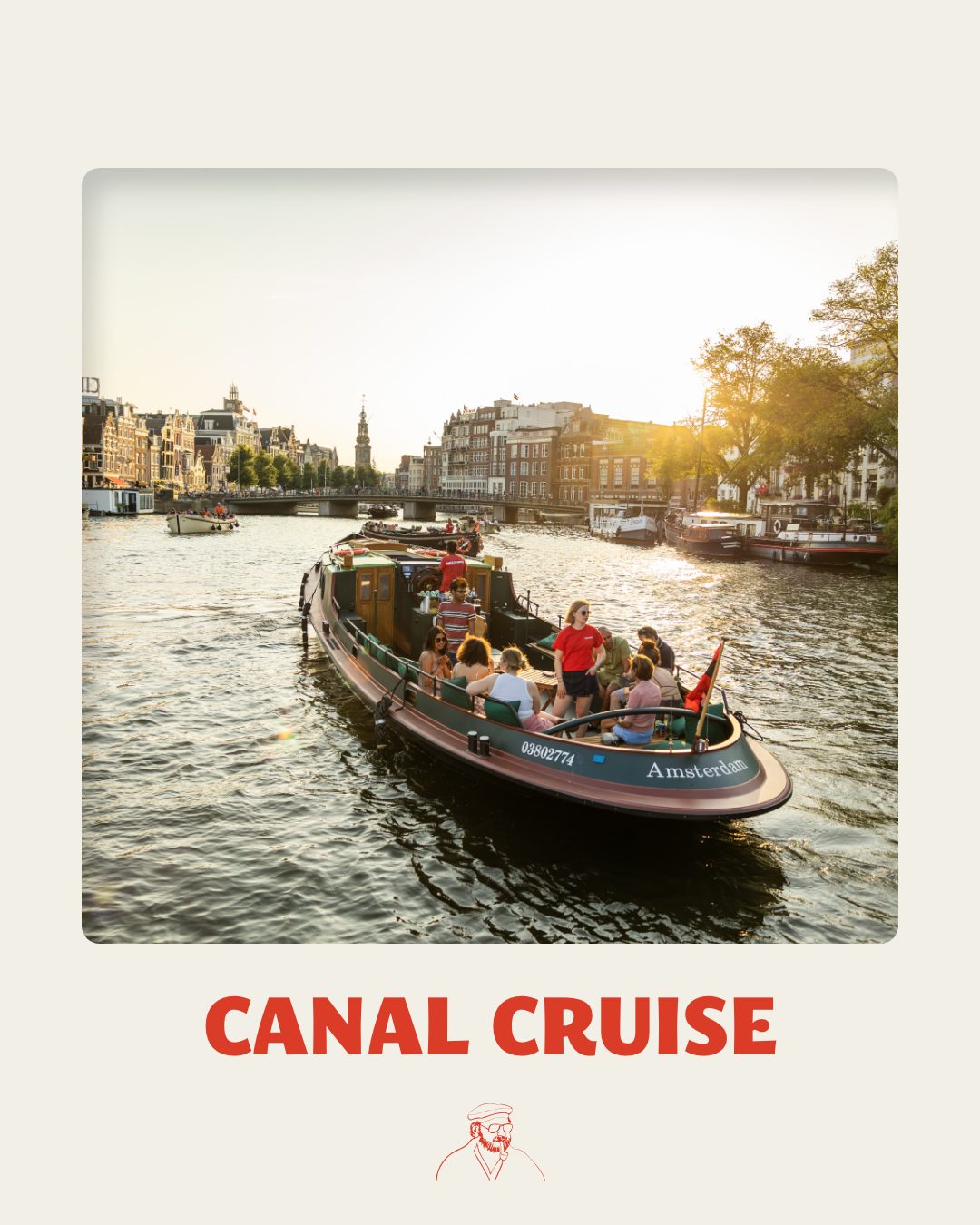
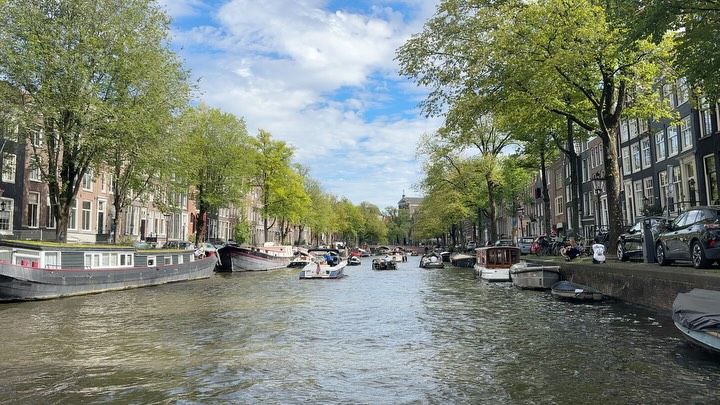
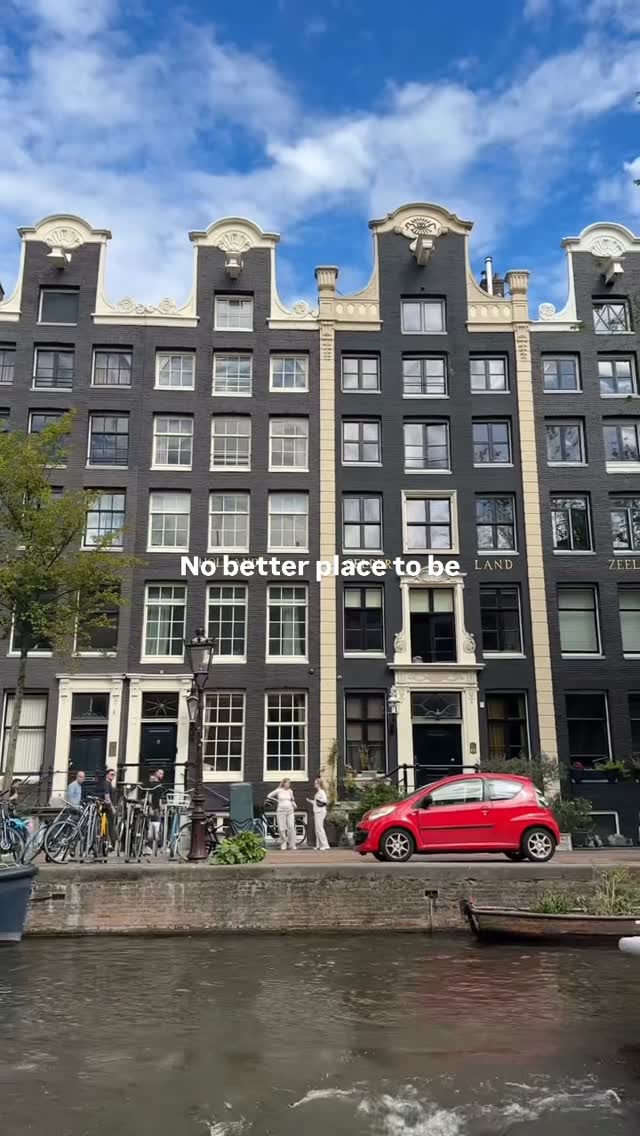
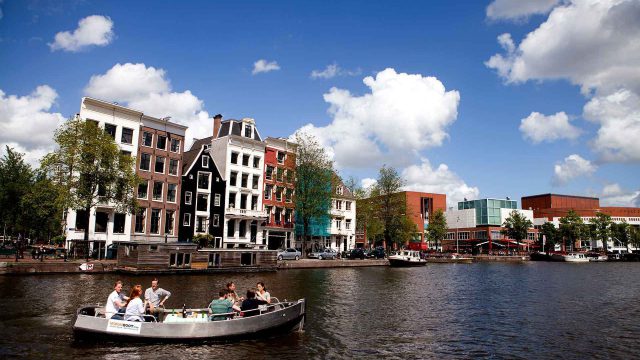
Amsterdam is known for its many canals. The waters of the canal belt that demarcate the city center are the best known: the Singel, the Herengracht, the Keizersgracht and the Prinsengracht. On the shore you will find the architecture of the Golden Age: narrow, high buildings with stepped gables and traditional ornaments. Discover this beautiful piece of Amsterdam history while sailing one of the many canal routes. Since 2010, the Amsterdam canal belt has been on the World Heritage List thanks to the unique and irreplaceable character of the canals. You can easily rent a boat at Mokumboot.

Enjoying Amsterdam’s Canals in a Mokumboot Small Boat

Book easily online

Are you excited about this 2-hour route? Click on the button below to reserve your boat. We recommend that you reserve a boat at the Center or Amstel boarding location. These locations are close to the canal belt, so you can start this beautiful route almost immediately.

Book a boat

Download our sailing map

The 2-hour canal route is marked in blue on our sailing map. Anyone who rents a boat from Mokumboot will also receive this sailing map prior to his or her trip. Would you like more information about this route? Then read on below. We would like to give you a short impression of this beautiful route:

Mokumboot small boat at Waterkant in Amsterdam

Cafe Waterkant

For this route, for convenience, we start from our Center location at Nassaukade 351. The cruise starts in a northwesterly direction past the always cozy Waterkant cafe. Immediately after the cafe, turn right. Sail until you can go no further and you will find yourself on the Prinsengracht. Turn right on Prinsengracht. NB! This canal is one-way traffic. The first stop is at Prinsengracht 436. The Palace of Justice.

Sloop cruising on the Prinsengracht in Amsterdam

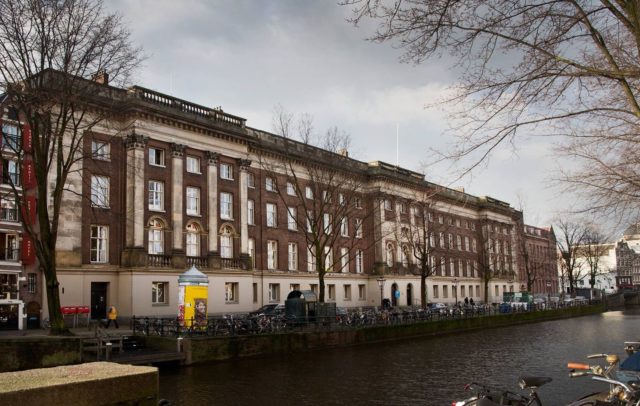
Palace of Justice

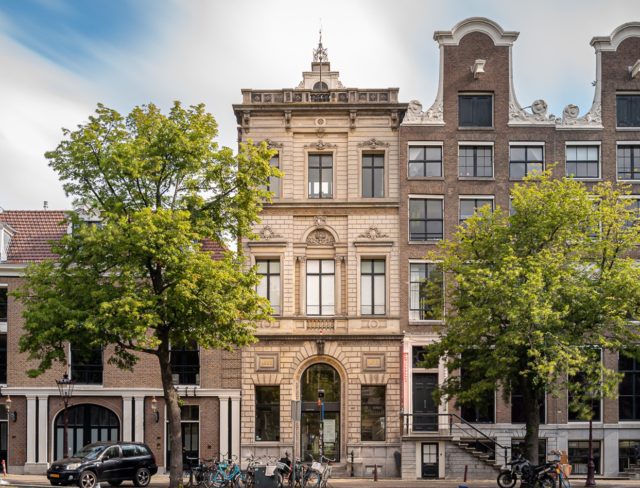
This building was a former orphanage and was converted into the Palace of Justice in 1825. The facade of the former orphanage has been completely renovated by the current facade, which is shaped according to classicism and has a cellar, brick center facades, heavy cornice, closed balustrade and three risalites, each reinforced with four colossal Corinthian pilasters. Since April 2013, the court has moved to the IJdok. Unfortunately, we do not have a permit to sail our boats on the IJ. On to the next stop!

Cruise all the way along the Prinsengracht until you reach the Amstel. Once on the Amstel, turn left. You can already see the next stop! Namely: the double drawbridge, called the Magere Brug.

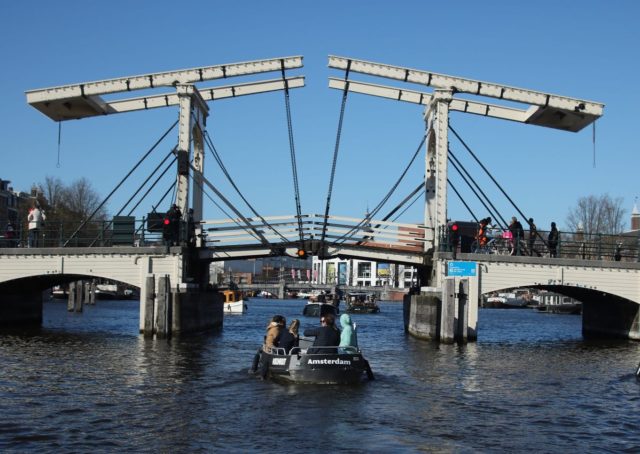
Tugboat on the Amstel with Magere Brug View

Skinny Bridge

The Skinny Bridge (Magere Brug in Dutch) is a double drawbridge over the Amstel river. This beautiful bridge has a rich history. Around 1691 it was the Kerkstraatbrug that connected both sides of the Amstel at this location with 13 passages. In 1871 this bridge was demolished and replaced by the current Skinny Bridge. Until 2003 it was possible to drive over this bridge by car, but nowadays it can only be used for cyclists and pedestrians to cross. After you have passed under the Skinny Bridge, turn into the next canal on your left, the Keizersgracht.

Small Mokumboot Sloop on the Amstel, Amsterdam

Foam Museum Amsterdam

Sail about 500 meters up the Keizersgracht and you will find the Foam Museum Amsterdam on your right, an internationally renowned photography museum housed in an 18th-century canal house. The museum shows all facets of contemporary photography by world-famous photographers and emerging talent in constantly changing exhibitions. Foam shows a wide range of genres, ranging from historical photographs and art photography to street photography and fashion photography. Across the canal is the Van Loon Museum, the former home of the Van Loon regent family.

Mokumboot small boat in front of Museum Van Loon on the Amsterdam canal

Van Loon Museum

The first resident of the former house was the painter Ferdinand Bol, a student of Rembrandt. The last residents of the house were the Van Loon family, who bought the house in 1884. Two centuries earlier, during the Golden Age, the family’s ancestor, Willem van Loon – one of the founders of the Dutch East India Company – lived here.

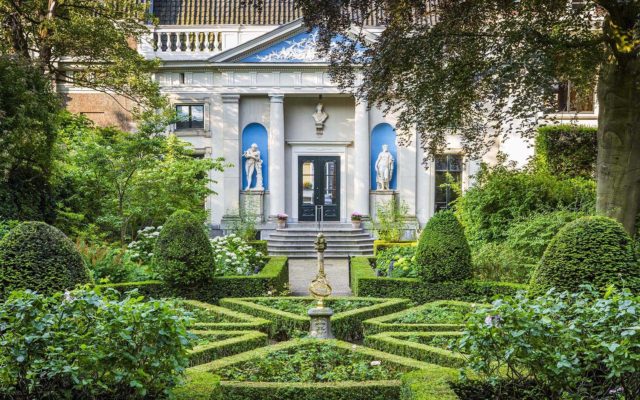
The interior of the house has remained largely intact over the centuries and still evokes the splendor of the 17th century. The rooms contain a large collection of paintings, beautiful furniture, precious silverware and porcelain from different centuries. Behind the house is a beautiful garden, an oasis of peace in the modern and busy city center.

Continue slowly down the Keizersgracht. The next stop, the 9 Streets, is less than a kilometer away.

Mokumboot small sloop cruising the Amsterdam canals

9 Streets

The Keizersgracht runs through the heart of the 9 Streets (9 Straatjes in Dutch) – a part of the Jordaan that consists of picturesque streets that connect the various canals and is filled with unique boutiques, stylish cafes and galleries. Hidden behind the Royal Palace on Dam Square, the area is popular with shoppers looking for specialty products and unique gifts.

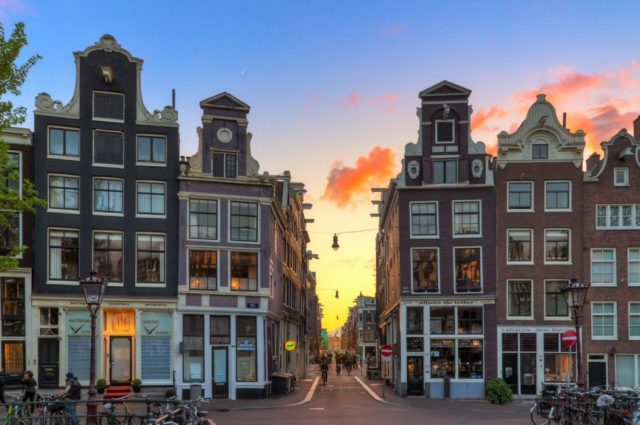
De 9 Straatjes is the ideal neighborhood to get to know Amsterdam in all its diversity and richness. The neighborhood offers a nice overview of the architectural styles in the city. From the beginning, these 9 side streets were dominated by trade and culture. And it is still a lively neighborhood after 400 years.

Just after the shopping area you will find the next stop on the left, the Church of Our Lady.

Mokumboot tugboat on the Amstel near Onze-Lieve-Vrouwekerk

Church of Our Lady

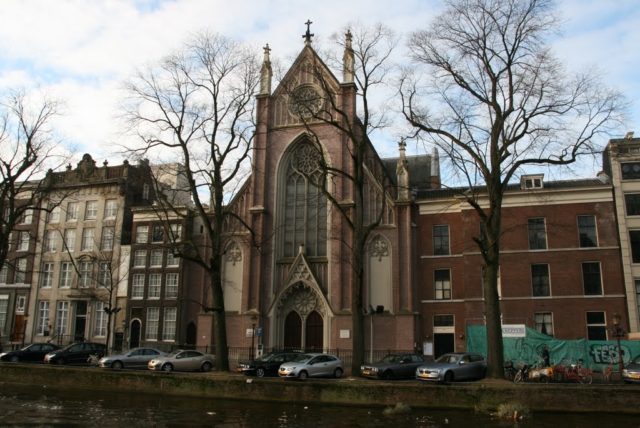
The Church of Our Lady (Onze Lieve Vrouwekerk in Dutch), also called the Syrian Orthodox Church, was designed by Theo Molkenboer, the most important architect of Catholic churches in the Netherlands in the mid-19th century. It was the first church he ever designed based on the principles of classical Gothic.

The Roman Catholic community was the original community served by this church when it was built between 1852 and 1854, shortly after the ban on building Roman Catholic churches was lifted. When the number of Roman Catholics in Amsterdam decreased, the church was sold to the Syriac Orthodox Catholic community, which allowed other denominations to use the church, including the Surinamese Roman Catholic community and the general Roman Catholic community. 150 meters further on on your left is the Gay Monument.

Mokumboot small boat near the Homomonument and Westerkerk, Amsterdam

Gay Monument

The Gay Monument in Amsterdam was the first of its kind in the world. The monument commemorates all gay men and women who died during World War II, as well as all LGBTI people who were or are being persecuted by governments. Almost immediately after the war, there were calls to erect a memorial, but it only really got off the ground in the 1980s. The monument was officially unveiled in September 1987.

The Homomonument consists of three pink granite triangles and together they form a larger triangle. The three points of the triangle are symbolic: one corner points to the National War Memorial on Dam Square; another points across the canal to the Anne Frank House; while the third corner points to COC Amsterdam. It remains the largest monument in the world dedicated to homosexuality and remembrance.

Cruise all the way out of the Keizersgracht until you can go no further and turn left twice onto the Prinsengracht. As soon as you enter the Prinsengracht you can see the Noorderkerk on your right.

Mokumboot small boat near Noorderkerk, Amsterdam

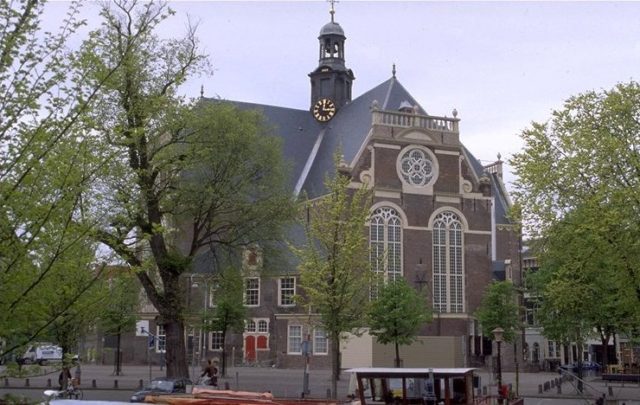
Noorderkerk

The church was built between 1620 and 1623 using the so-called central construction method, the church plan forms a Greek cross, and triangular service houses were built in the armpits. Following this example, the Nieuwe Kerk was built in Groningen and the Groote Kerk in Maassluis.

The Noorderkerk was restored between 1993 and 1998. During the restoration, largely paid for by the municipality of Amsterdam and the government, it was determined that the church should also be used for cultural activities. Concerts are given regularly. Since 1999, the Noorderkerk concerts have taken place every Saturday afternoon.

Half a kilometer further on you will find the Anne Frank House on your left.

Canal Tour with Mokumboot at the Anne Frank House

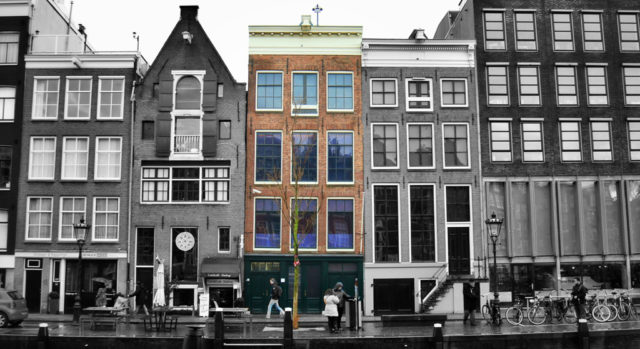
Anne Frank House

The Anne Frank House. This building owes its name to Annelies Marie (Anne) Frank, who became known for her diary. The Jewish girl from Germany wrote one of the most read books in the world with her diary. The Anne Frank House contains a secret annex, where Anne Frank went into hiding with her parents and sister from July 6, 1942 to August 4, 1944. Nowadays the house has been transformed into a museum where the story of Anne Frank and her history are told. The Anne Frank House can be visited daily from 9 AM to 10 PM.

Mokumboot sloop at Prinsengracht near Westerkerk

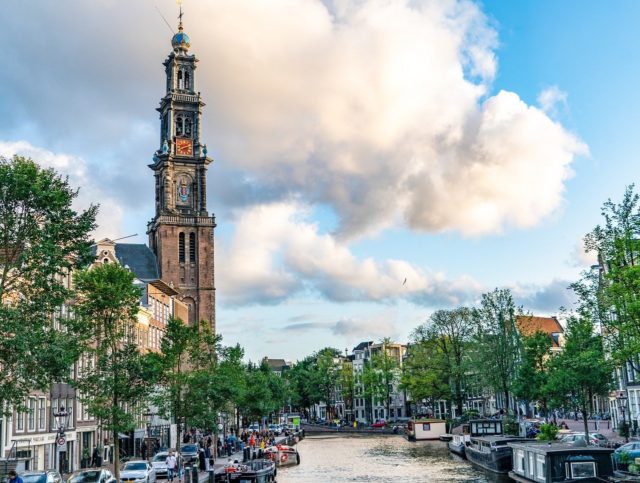
Westerkerk

As your last stop you will pass the Westerkerk. The Westerkerk was built between 1620 and 1631 in Renaissance style according to a design by master builder Hendrick de Keyser. The Westerkerk was completed under the leadership of his son, Pieter de Keyser, and put into use on June 8, 1631.

The church has a length of 58 meters and a width of 29 meters. The high central nave (nave) is flanked by the two lower side aisles. The three-aisled basilica has a rectangular plan with two transepts of equal dimensions. As a result, the floor plan took the shape of two connected Greek crosses.

After approximately 250 meters, turn right back onto the Lauriergracht and sail past the De Waterkant café back to our main location.

We hope you had a good time and that you will come and try one of our other sailing routes next time! Check them out below.

Sail the 2-hour Canal Route yourself

Call Mokumboot directly for more information about renting a boat or book directly via our online reservation system. Mokumboot is open 7 days a week from 9:00 AM to 10:00 PM.

Book a boatCall 020 210 5700

Frequently asked questions

Frequently Asked Questions

Question not listed?

Send us a message, we are happy to help.

Send a WhatsApp Call +31 20 210 5700

What is the 2-hour canal route offered by Mokumboot?

The 2-hour canal route offered by Mokumboot allows you to explore Amsterdam’s historic canal belt, including the Singel, Herengracht, Keizersgracht, and Prinsengracht. Along this route, you’ll witness the city’s Golden Age architecture, characterized by narrow, high buildings with stepped gables and traditional ornaments. This canal belt has been a UNESCO World Heritage site since 2010 due to its unique and irreplaceable character. You can easily rent a boat from Mokumboot to embark on this scenic journey.

More information about 2-hour Canal Route

How can I book a boat for the 2-hour canal route?

You can book a boat for the 2-hour canal route by visiting Mokumboot’s online reservation system. It’s recommended to choose the Center or Amstel boarding locations, as they are close to the canal belt, allowing you to start the route almost immediately. For more information or assistance, you can contact Mokumboot directly at +31(0)20 210 5700.

Do I need a boating license to rent a boat from Mokumboot?

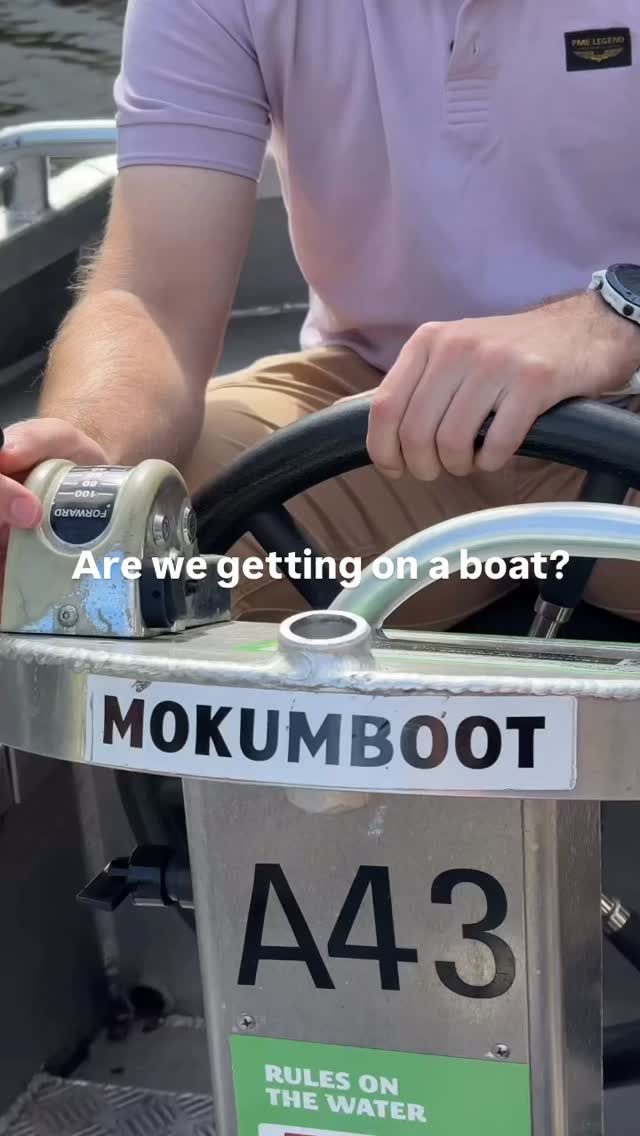
No, you do not need a boating license to rent a boat from Mokumboot. Their electric sloops are easy to steer and suitable for up to 6 people. Anyone aged 18 and above can be the captain of one of their boats, making it accessible for both experienced and novice boaters.

What are the operating hours of Mokumboot?

Mokumboot operates seven days a week, from 9:00 AM to 10:00 PM. This schedule provides ample time for you to plan and enjoy your boating experience on Amsterdam’s canals at a time that suits you best.

Are there any specific rules I should follow while sailing the canals?

Yes, there are several important rules to follow while sailing the canals: always stay on the right side of the canal, maintain a maximum speed of 6 km/h, give right of way to boats coming from the right and to professional ships like canal tour boats, and avoid sailing under the influence of alcohol. Additionally, it’s prohibited to play music or cause disturbances on the water. Adhering to these rules ensures a safe and enjoyable experience for everyone.

Can I bring my own food and drinks on the boat?

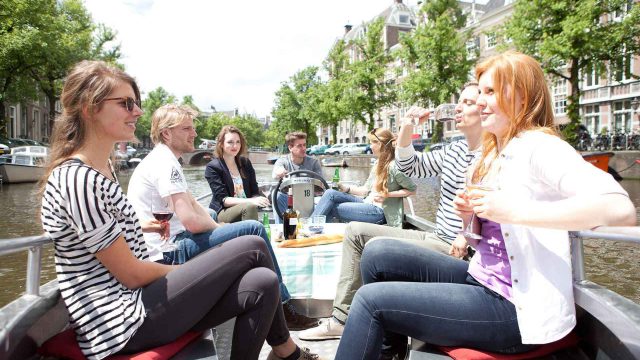
Yes, you are allowed to bring your own food and drinks on the boat. However, please note that while consuming alcohol is permitted, the captain must remain sober at all times to ensure safe navigation. Enjoying a picnic on board can enhance your boating experience as you explore Amsterdam’s canals.

Is there a map available for the 2-hour canal route?

Yes, Mokumboot provides a sailing map that highlights the 2-hour canal route, marked in blue. This map includes useful tips and routes to help you navigate the canals. You will receive this map prior to your trip, and it’s also available for download on their website.

What are some notable landmarks along the 2-hour canal route?

Along the 2-hour canal route, you’ll encounter several notable landmarks, including the Palace of Justice, a former orphanage converted into a courthouse in 1825, and the Skinny Bridge (Magere Brug), a historic double drawbridge over the Amstel River. These landmarks offer a glimpse into Amsterdam’s rich history and architectural heritage.

What is the maximum number of people allowed on a Mokumboot boat?

Each Mokumboot electric sloop can accommodate up to 6 people. This capacity ensures a comfortable and enjoyable experience for small groups of friends or family as you navigate the canals of Amsterdam.

How much does it cost to rent a boat for the 2-hour canal route?

Renting a boat for the 2-hour canal route with Mokumboot starts from €97.50. This price includes the rental of an electric sloop suitable for up to 6 people, allowing you to explore Amsterdam’s canals at your own pace.

Mokumboot Instagram

It’s time to discover Amsterdam your way!See Amsterdam the easy way - from the water.Good people, good weather, good canals.Still looking for plans this weekend?We’re still out hereExactly.